
Limelight Hydrangea Tree: The GTA’s Best Low-Maintenance Statement Bloomer

Hydrangea paniculata ‘Limelight’ (tree form / standard)
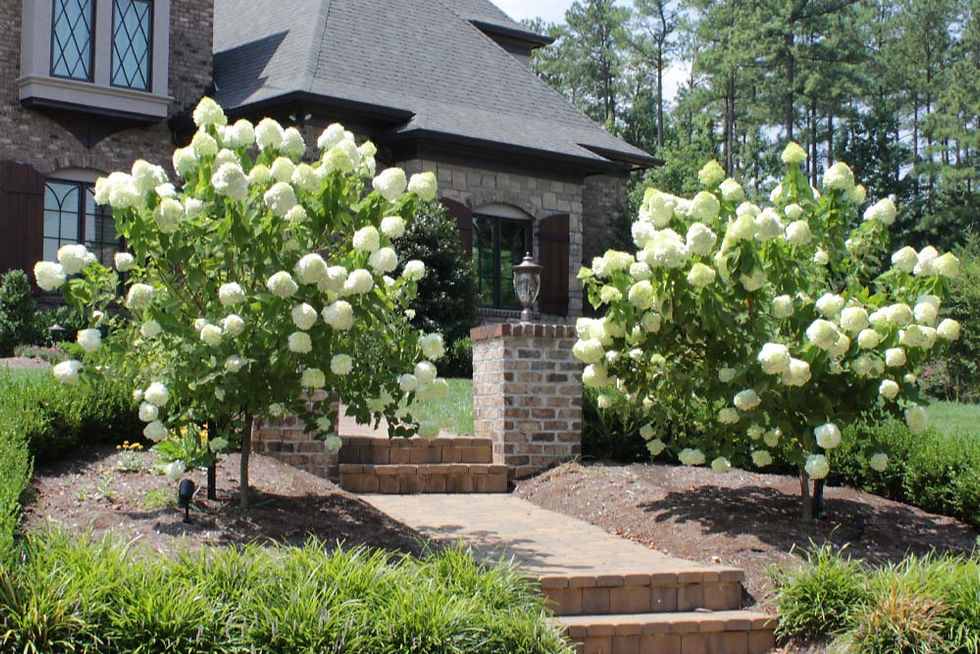
Photo idea: Limelight hydrangea tree in late summer—large lime-green blooms above a clean underplanting bed.
Summer-to-Fall “Statement Blooms” (Without Babying)

In GTA gardens, a lot of flowering shrubs look amazing for a few weeks… and then disappear into green. Limelight Hydrangea Tree is different. It’s one of those plants that gives you a long season of impact—big, cone-shaped blooms that start a fresh lime green, shift toward creamy white, and then pick up soft pink tones as fall approaches.
In our residential projects across Toronto and the GTA, Limelight “tree form” is one of our go-to choices when a client wants a clean focal point near patios, entrances, or along a main view line—something that reads polished, modern, and intentional, without needing constant attention.
What Limelight Tree Looks Like (and Why It Works Here)
Limelight is a panicle hydrangea, which is important in the GTA because it blooms on new wood (this is the “easy one” compared to bigleaf hydrangeas that can fail after harsh winters). In tree form, it’s trained onto a single trunk with a rounded canopy—almost like a flowering “lollipop” that sits above the planting bed.

Across the seasons it shifts like this:
Spring: fresh leaf-out, tidy structure
Mid-summer: lime-green cone blooms begin (the classic Limelight look)
Late summer–fall: blooms turn creamy white, then blush pink
Winter: woody structure remains; dried blooms can be left for texture
It’s one of the easiest ways to add height and drama without planting a large tree, which makes it perfect for smaller front yards, narrow side yards, or tight foundation beds.
The Forms We Use Most Often
Limelight comes in different sizes and habits, but in GTA residential design we mainly use two “formats”:
1) Limelight Tree (Standard) — the clean focal point
This is the version most people picture when they say “Limelight Hydrangea Tree.”
Size: typically 6–8' tall (varies by training and pruning)
Shape: single trunk, rounded flowering canopy
Best used: front yards, entry focal points, patio corners, planting beds where you want height without bulk

This is our choice when the design needs a clear vertical moment—something that looks intentional from day one.
2) Limelight Shrub (Multi-stem) — mass + soft screening
The shrub form is fuller and wider, great when you need volume.
Size: often 6–8' tall and wide (with pruning control)
Best used: background layer, along fences, soft seasonal screening
If a client wants “a hydrangea hedge feel,” shrub form usually does that better than the tree standard.
Design Roles: A “Flowering Tree” Look + Strong Seasonal Colour
In our projects, Limelight Tree usually lands in two main roles.

1) A focal point near patios, entrances, and main sightlines
Because the canopy floats above the ground, it gives a layered look immediately:
Upper layer: Limelight blooms (high visual impact)
Middle layer: neat evergreens (boxwood, yew, inkberry)
Lower layer: grasses/perennials (Hakonechloa, hosta, heuchera, sedges)
This structure is especially useful in modern layouts where hardscape is clean and planting needs to feel intentional instead of “random colour.”
2) A “soft tree” to balance hard lines and architecture
Limelight Tree is a great counterbalance for rectilinear spaces:
Porcelain or large-format stone patios
Straight foundation lines
Clean fence edges
Minimalist front yard layouts
The blooms add softness without making the design feel messy.
Light, Site and Soil in the GTA
Limelight is one of the most forgiving hydrangeas we use—especially compared to bigleaf types.
Light
Full sun to part sun is ideal
More sun = stronger flowering (but watch drought stress)
Part shade works well in many GTA backyards, especially where afternoon shade protects blooms
Soil
Moist, well-drained soil is best
Tolerates clay if drainage is decent (improve with compost/topsoil where possible)
Avoid consistently soggy corners
Climate
Panicle hydrangeas are very winter reliable in the GTA
Blooms on new wood = less stress about winter dieback
Availability and Budget in the GTA
From a design-build perspective, Limelight Tree is popular because it’s widely available and predictable:
Easy to source in local nurseries (often 7-gallon to 10-gallon for standards)
More expensive than shrub form, but the “finished look” is immediate
Great value when a client wants a focal point without installing a large tree

Care Notes We Share with Homeowners
Limelight Tree is low-maintenance, but there are a few key care points that keep it looking sharp:
Watering: consistent watering in the first 1–2 seasons; important during hot spells
Pruning: best done late winter / early spring (it blooms on new wood)
Light prune for shape, stronger prune for larger blooms and tighter canopy
Staking: tree form may need support when young or in windy sites
Snow load: in heavy snow/ice winters, avoid letting branches stay weighed down for long
The main “design” decision is placement: give it enough light, keep it away from constant roof drip lines, and allow room for the canopy so it doesn’t crowd walkways.
Why Limelight Tree Keeps Showing Up in Our Designs
For Toronto and GTA residential landscapes, Limelight Hydrangea Tree checks a lot of boxes:
Long bloom season with a colour shift that feels “designed”
Reliable flowering year after year (new wood bloomer)
A clean focal point that works in both classic and modern gardens
Easy to pair with evergreens + ornamental grasses
Widely available and predictable in local nurseries
If you want one plant that instantly makes a planting bed feel finished—especially near patios, entries, or a main viewing window—Limelight Tree is one of the safest, strongest choices in the GTA.


Comments